Notes · Linhó
The coach who won playing with his weak hand
I spent two rounds thinking the man was out of his depth. Then I looked at which hand the racket was in.
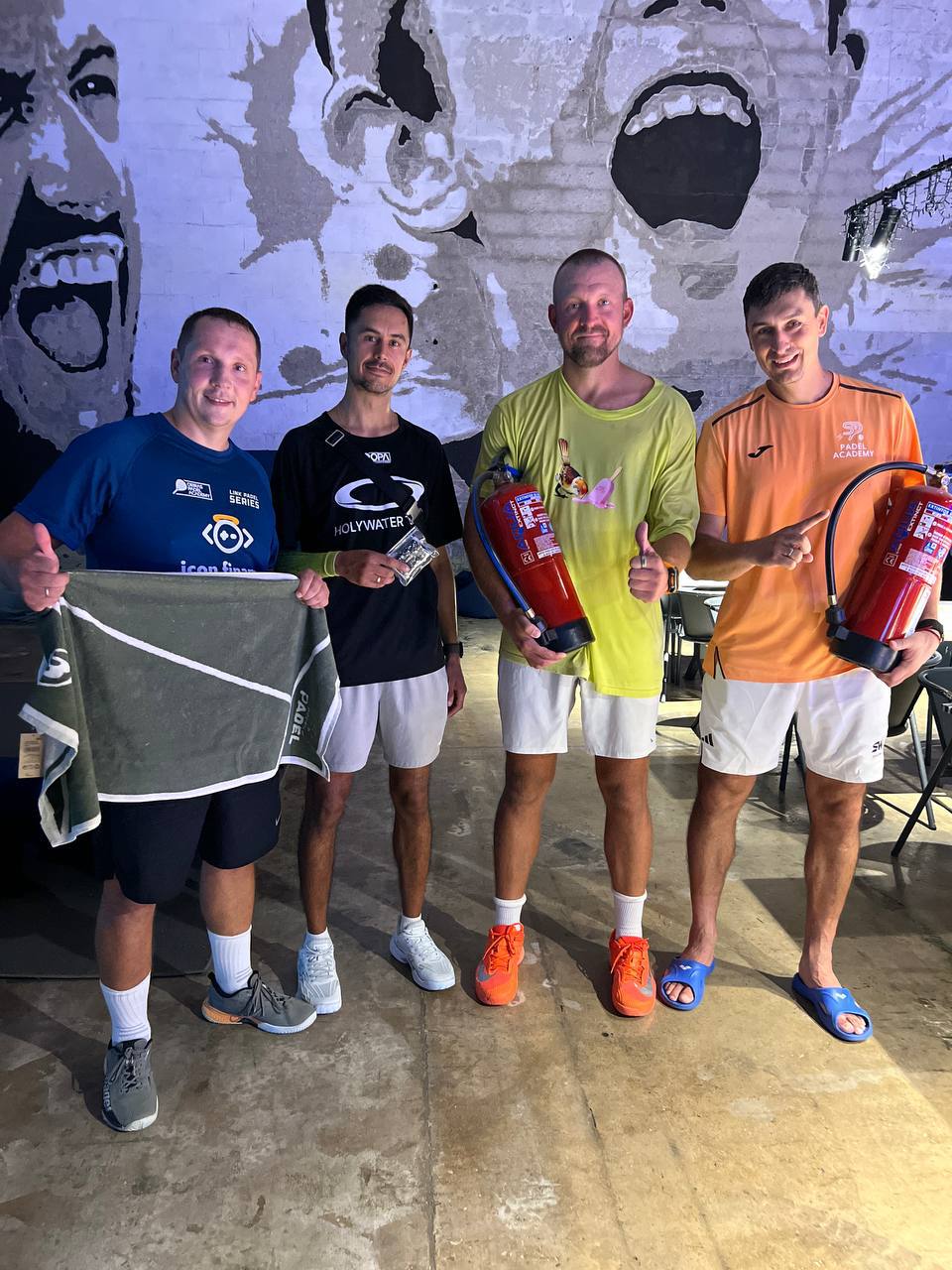
An eyewitness note. There is no score here, no bracket and no number of pairs — I came to watch, not to record. What is here is what was visible from behind the glass, plus two things I checked afterwards.
For two rounds I thought the man was out of his depth
You know the player. You watch for a minute and decide he has wandered into the wrong draw. The shots are there, but every one of them lands a semitone flat. The ball goes where it was not sent. A bandeja that should die in the corner floats down the middle. His partner covers one step more than he should have to.
That is exactly how it looked. I wrote him off somewhere in the second game and turned to watch the next court.
Then I came back, because they were still playing. And I looked properly.
The racket was in the wrong hand
He is right-handed. He played the entire tournament with his left.
Not an injury, not a left-hander. A deliberate handicap, written by himself, and not taken off once all day.
The picture inverts the second you see it. The shots are not a semitone flat — they are being built from nothing. What I had filed as a weak player was a man playing with an arm that has never done this, and still holding the point together.
His name is Viacheslav Siedoplatov. He is the senior coach of Ukraine's national padel team. That part I checked at home, in two Ukrainian sports outlets, both linked at the bottom. On Instagram he is padel_coach_siedoplatov.
Why padel is the worst place to try this
In tennis the wrong arm gives you weaker shots. In padel it breaks three things at once, and two of them are not technical.
- The overhead. A bandeja is a shot you place, not one you hit. Placing it takes a wrist that has done it ten thousand times. A new wrist puts the ball wherever the ball goes.
- The glass. A ball off the back wall arrives on a timing your body knows by habit, and the habit belongs to the other arm. You end up counting the bounce with your head, and the head is slower than the habit.
- The diagonal. The two sides of a padel court are different jobs. Switch hands and you switch which side your forehand lives on, which rewrites the whole logic of the pair: who takes the middle, where the cross-court comes from.
- The partner. The least technical and the hardest. Someone next to you runs further all day because of a decision you made. That is a social cost, not a physical one, and it is heavier than the bandeja.
Ordinary club players gave him a proper fight
This was the best part of the day, and it is the part I want left standing here.
The people across the net were normal players. Not the national squad, not ranked names — men who play Tuesdays and Thursdays, like the rest of us. And they ran him around. Long points where you could see it was costing him. Games he lost outright. Moments where his face said the handicap had turned out dearer than it looked that morning.
There was no gentle walk through the draw. There was a grown man who was uncomfortable, playing as though that were normal.
And then a small thing happens that was worth the trip: the level you have assigned yourself starts to look different. When a club player goes toe to toe with the senior coach of a national team, that says something about the coach and something about the club player. Most of us underrate the second half.
There were a lot of children, and they played well
The second reason the day stuck. There were a lot of kids on court, and it was not the kids-with-rackets picture.
Not "good for their age" — good. They held the point, covered their half, dug balls off the glass and did not fall apart after losing a game. I caught myself watching the junior court for longer than I had meant to, and not fondly. With interest.
It is the same thought as the paragraph above, from the other side. The level around you is higher than you picture it. A grown man turns up to his first tournament worried about embarrassing himself, and next to him a child is calmly doing the thing he has been working on for three years, because nobody told her it was hard.
A club with that many children on a Saturday, playing like that, is a club where somebody has been doing the work for a long time. That does not happen by accident.
He won it anyway
No scores — I did not write them down. But he took the tournament.
Here is what follows from that, and what does not. It does not follow that he is twice the player of everybody there: the handicap is large, and this was a local draw rather than a national championship. What does follow is more useful. Take the power out of someone's game and everything else is still there, and the everything else turned out to be enough. Position. Timing. Reading the point. The parts that keep working when you are tired, older, or simply outgunned.
If you want one argument for taking a coach, it is not that he hits harder than you. It is that he does not have to. We wrote about that separately, and that Saturday it stopped being theory.
It all starts with the hip
The evening before, we stood on a balcony taking the forehand apart. Night, Lisbon, two grown men showing each other an arm movement with no racket in it.
The conclusion we arrived at, somewhere well into the night: it all starts with the hip.
It sounds like a joke, and it is one if you are watching two people rotate their hips on a balcony. But the next day on court that is exactly what was visible. His arm was borrowed. His hips, his legs and the way he set himself under the ball were his own. That is what carried him to the end of the draw.
Should you try it yourself
Yes, but not the way it looked on court. He is a coach; he knows what he is doing to his own shoulder. The sane version for the rest of us:
- Ten minutes at the end of a session, not a whole match. The wrong arm tires before you notice, and the shoulder does not send a warning.
- Flat balls from the back only. No overheads — the shoulder is exactly where that ends badly.
- With a partner who has agreed to it. Otherwise it is not a drill, it is you ruining his game.
- The goal is not to learn to play left-handed. The goal is to find out how much of your normal game is standing on habit alone.
Thanks
The tournament was run by Link, and run well: the draw kept to its times, courts came free when they were supposed to, and nobody spent the afternoon working out who was on next. That sounds like a small thing until you have been to a tournament without it.
It was played at Blue Padel Kourts in Linhó, outside Sintra. The club hosted it properly, the service was even all day, and not one small thing turned into a problem. It is already on our list of courts we play, and after this Saturday it stays there on merit.
Nobody asked for this piece and nobody paid for it. Neither the organiser nor the club knew it was coming until it went up. If a brand ever does pay for something on this site, it will say so on the page.
What we do not know
The scores, the shape of the draw, the number of pairs, the category. I was watching, not keeping a record, and I am not going to fill the numbers in afterwards — they would be the only thing on this page I did not see with my own eyes.
Questions people actually ask
Does playing with your weak hand actually help your padel?
We watched one tournament, so treat this as an observation and not a study. What the weak hand clearly does is strip away the shots you play without thinking. You cannot muscle a ball you have no strength for, so you are left with position, timing and reading the point — the parts of padel that keep working when you are tired, old or outgunned. Whether it transfers back to your strong hand is a separate claim, and not one we can make from a Saturday in Linhó.
Who is Viacheslav Siedoplatov?
The senior coach of Ukraine's national padel team. Ukrainian sports press describes him as a player-coach who combines his own matches with building the team's training system. We have linked the two reports we used at the bottom of this page, and he is padel_coach_siedoplatov on Instagram; everything else here is what we saw from the glass.
What is hardest about padel with the wrong hand?
From the outside, the overhead. A bandeja is a shot you place rather than hit, and placing it needs a wrist that has done it ten thousand times. The second thing is the glass: a ball off the back wall arrives on a timing your body knows by habit, and the habit belongs to the other arm. The third is not technical at all — your partner has to cover more court, and that is a social cost, not a physical one.
Was this article paid for?
No. Nobody asked for it and nobody paid for it. The organiser and the club are thanked here because the day was well run, and they found out about this text when it went up. If a brand ever does pay for something on this site, it will say so on the page.